
Physical Deterioration Explained
Physical Deterioration refers to the loss of value that machinery and equipment experience because of wear, age, usage, and exposure to operating conditions. It is an important factor in machinery and equipment appraisals because an asset’s physical condition can directly influence its value.
Understanding Physical Deterioration helps business owners, lenders, and attorneys recognize how equipment condition affects valuation. Although machinery may remain operational for many years, its value can change as components wear down and maintenance requirements increase.
What Is Physical Deterioration?
Physical Deterioration is the decline in an asset’s physical condition caused by use, aging, damage, or environmental exposure. In equipment appraisal, it represents one of the primary forms of depreciation considered under the cost approach.
For example, a manufacturing machine may develop worn bearings, damaged components, or reduced operating efficiency after years of use.
Even if the machine remains functional, its physical condition may reduce its value compared with similar equipment in better condition.
However, deterioration does not occur at the same rate for every asset. Maintenance, operating conditions, and usage patterns can significantly influence the amount of physical wear.
What Causes Physical Deterioration?
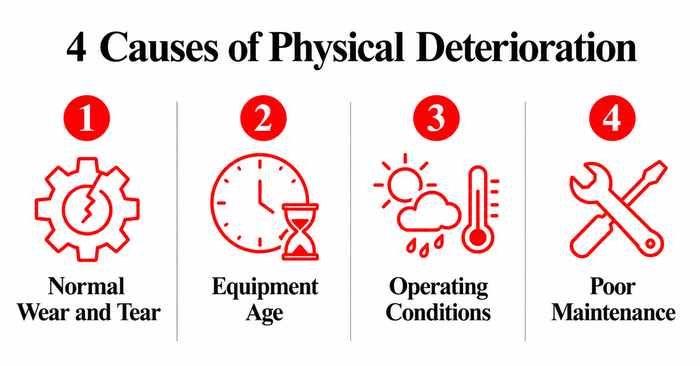
Several factors contribute to equipment wear in machinery and equipment.
Normal Wear and Tear
Normal wear and tear occurs through regular equipment operation. Moving parts, mechanical systems, and other components gradually experience wear.
For example, a machine used continuously may experience more component wear than a similar machine operated occasionally.
Equipment Age
As machinery ages, components may deteriorate even when the equipment receives proper maintenance.
However, age alone does not determine equipment condition. A well-maintained older machine may remain in better condition than a newer machine subjected to heavy use.
Operating Conditions
Equipment operating in demanding environments may experience accelerated deterioration.
For example, exposure to dust, moisture, extreme temperatures, or corrosive materials can affect machinery components and performance.
Maintenance and Repairs
Maintenance practices influence how equipment deteriorates over time.
Routine inspections, lubrication, and timely repairs can help preserve equipment condition. Conversely, neglected maintenance may increase wear and reduce remaining useful life.
Proper machinery maintenance is important for equipment condition and workplace safety. The Occupational Safety and Health Administration (OSHA) provides additional guidance on machinery maintenance and repair procedures.
How Does Physical Deterioration Affect Machinery Value?
Physical wear can reduce machinery value because buyers may consider repair expenses, operating reliability, and remaining service life.
For example, two identical machines may have different values because one has received regular maintenance while the other requires substantial repairs.
An equipment appraiser considers these differences when evaluating the machinery.
Additionally, physical deterioration may affect the asset’s marketability. Equipment requiring extensive repairs may attract fewer buyers or sell for less than comparable machinery in better condition.
However, deterioration does not always make machinery unusable. Many older assets continue to provide reliable service despite normal physical wear.
Curable and Incurable Physical Deterioration
In machinery appraisal, physical deterioration may be classified as curable or incurable.
Curable Physical Deterioration
Curable Physical Deterioration refers to physical deficiencies that can be repaired economically.
For example, replacing a worn component may restore equipment performance and improve its value.
Whether a deficiency is curable depends on the repair cost relative to the value benefit.
Incurable Physical Deterioration
Incurable Physical Deterioration refers to deterioration that cannot be economically corrected.
For example, extensive structural wear may require repairs that cost more than the resulting improvement in equipment value.
In these situations, the deterioration may remain a factor in the appraisal.
How Does an Equipment Appraiser Evaluate Physical Deterioration?
An equipment appraiser examines the asset’s condition and relevant supporting information to determine how Physical Deterioration affects its value.
Important considerations include:
- Equipment age: The amount of time the machinery has been in service.
- Operating hours: The level of use the equipment has experienced.
- Physical condition: Visible wear, damage, corrosion, and component deterioration.
- Maintenance history: Records of routine servicing and repairs.
- Repair requirements: The extent and cost of necessary repairs.
- Operating environment: Conditions that may accelerate equipment wear.
- Remaining useful life: The expected period of continued economic usefulness.
- Comparable equipment: Market evidence involving machinery in similar or different conditions.
The appraiser considers these factors alongside the appropriate valuation methods and definition of value.
Therefore, an appraisal does not rely solely on equipment age or accounting depreciation.
Physical Deterioration and Equipment Depreciation
Physical Deterioration is one of three major forms of depreciation commonly considered in machinery and equipment valuation.
| Type of Depreciation | Meaning |
|---|---|
| Physical Deterioration | Loss of value caused by physical wear, aging, damage, or environmental exposure. |
| Functional Obsolescence | Loss of value caused by design limitations, reduced efficiency, or technological changes. |
| Economic Obsolescence | Loss of value caused by external economic, regulatory, or market conditions. |
These forms of depreciation can affect an asset simultaneously.
For example, an older machine may experience physical wear while also becoming less competitive because of newer technology.
As a result, an equipment appraiser evaluates the relevant factors rather than assuming that all depreciation results from physical condition.
When Does Physical Deterioration Matter?
Equipment condition may influence appraisals for several business purposes.
Equipment Financing
Lenders may require machinery appraisals when equipment serves as collateral. The asset’s condition can affect its estimated value and marketability.
Business Sales and Acquisitions
Equipment condition may influence the value of machinery included in a business transaction.
Asset Management
Businesses may evaluate equipment deterioration when planning maintenance, replacements, or machinery sales.
Financial Reporting
Certain financial reporting assignments require machinery valuations. The appraisal methods and assumptions depend on the applicable reporting requirements.
Example of Physical Deterioration in Machinery Appraisal
Hypothetical Example
A manufacturing company owns two similar industrial milling machines. Both machines were manufactured in the same year and have comparable specifications.
However, the first machine has received regular maintenance and operates in a controlled environment.
The second machine has experienced heavier usage, inconsistent maintenance, and increased component wear.
Although both machines remain operational, their physical conditions differ.
An equipment appraiser reviews the machines’ operating hours, maintenance records, repair requirements, and overall condition. The appraiser also considers relevant market evidence.
As a result, the machines may receive different value conclusions despite having the same age and similar specifications.
This example demonstrates why physical condition is an important consideration in machinery valuation.
Why Physical Deterioration Matters in Equipment Appraisals
Physical Deterioration helps explain how machinery loses value through use, aging, and environmental exposure.
Without a professional evaluation, equipment owners may rely on original purchase prices, accounting records, or equipment age alone.
However, these factors may not accurately reflect an asset’s current condition or value.
A machinery appraisal considers physical condition alongside market demand, equipment specifications, and the applicable valuation approach.
Therefore, understanding Physical Deterioration helps businesses make informed decisions about their machinery and equipment.
Understanding Physical Deterioration With Machinery Appraisals
Machinery and equipment appraisals provide valuable information for businesses, lenders, attorneys, and other professionals who need to understand asset values.
A professional equipment appraisal can evaluate physical deterioration alongside other factors affecting machinery value.
Whether the assignment involves manufacturing machinery, industrial equipment, or other business assets, the appraisal should consider the intended use and appropriate definition of value.
For additional information about machinery and equipment valuation, visit Machinery Appraisals to learn more about available appraisal services and discuss your equipment valuation needs.
October 20, 2026 3:58 pm
Comments are closed here.