
Machinery Appraisals for Port Cities: Miami, Long Beach & Savannah
Port cities like Miami FL, Long Beach CA, and Savannah GA are economic powerhouses driven by international trade. Unlike inland markets, machinery appraisals in port regions are heavily influenced by:
- Global shipping demand
- Import/export fluctuations
- Tariffs and trade policies
- Supply chain disruptions
- Port congestion trends
- Infrastructure expansion projects
For businesses operating in logistics, warehousing, freight forwarding, or terminal operations, a certified machinery appraisal isn’t just about asset value, it’s about understanding how global trade cycles affect your equipment.
We provide independent, USPAP-compliant machinery appraisals tailored specifically to port-based operations.
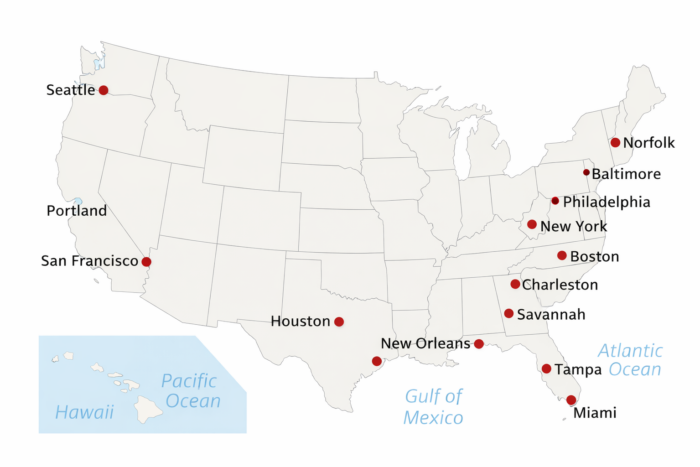
Key Equipment Categories in Port City Machinery Appraisals
1. Shipping Containers: Valuation in a Supply Chain-Driven Market
What Impacts Shipping Container Value?
Shipping containers may appear standardized, but their values fluctuate significantly based on global trade activity.
In cities like Long Beach (America’s busiest container port) and Savannah (fastest-growing container gateway on the East Coast), container pricing can shift rapidly due to:
- Import surges from Asia
- Backlog congestion
- Container shortages
- Repositioning costs
- Steel prices
- International freight rates
Appraisal Considerations
When appraising shipping containers, we analyze:
- Container type (Dry Van, Reefer, Open Top, High Cube)
- Age and CSC certification status
- Structural condition and corrosion
- Market demand in regional depots
- One-way leasing vs. ownership economics
For example:
- During import spikes, used container values often rise due to limited availability.
- During freight slowdowns, surplus containers flood the resale market, lowering fair market value.
An accurate appraisal must account for these logistics-driven price cycles, not just depreciation schedules.
2. Forklift Appraisals in High-Traffic Port Operations
Forklifts are the backbone of port warehousing and distribution facilities in Miami, Savannah, and Long Beach.
Types Commonly Appraised in Port Cities
- Heavy-capacity forklifts (15,000+ lb)
- Container handlers
- Reach stackers
- Electric warehouse forklifts
- LPG and diesel yard forklifts
Factors That Influence Forklift Value in Port Regions
Unlike general warehouse forklifts, port-based forklifts often experience:
- High operational hours
- Salt-air corrosion (coastal exposure)
- Continuous multi-shift usage
- Accelerated wear and tear
Additionally, import/export fluctuations directly impact utilization rates. When cargo volume drops, excess equipment may enter the resale market, depressing values.
When cargo volumes increase, demand for container handlers and reach stackers surges, driving short-term price increases.
What Certified Machinery Appraisals Evaluate
- Manufacturer and model (e.g., Hyster, Kalmar, Taylor)
- Capacity and mast configuration
- Hour meter readings
- Maintenance history
- Hydraulic system condition
- Regional secondary market demand
For lenders and asset-based financing institutions, accurate forklift valuations are essential when underwriting logistics companies operating near major ports.
3. Port Crane Appraisals: High-Value, High-Complexity Assets
Port cranes represent some of the highest-value assets in maritime logistics.
Common Crane Types in Miami, Long Beach & Savannah
- Ship-to-Shore (STS) Gantry Cranes
- Rubber-Tired Gantry (RTG) Cranes
- Rail-Mounted Gantry (RMG) Cranes
- Mobile Harbor Cranes
These multimillion-dollar assets require specialized appraisal expertise due to:
- Long operational lifespans (20–40 years)
- Significant maintenance and retrofit costs
- Regulatory compliance requirements
- Technological upgrades (automation & remote operation)
Import/Export Fluctuations and Crane Valuation
Crane value is closely tied to:
- Port throughput volume
- Infrastructure expansion projects
- Automation investment trends
- Global trade stability
For example:
- Long Beach modernization projects increase demand for newer automated cranes.
- Slowdowns in international shipping may delay equipment replacement cycles, impacting secondary market liquidity.
When appraising port cranes, we assess:
- Load capacity and outreach
- Automation systems
- Structural integrity
- Maintenance records
- Obsolescence risk
- Relocation feasibility and cost
Because relocation is expensive and complex, crane resale markets are highly specialized. This makes professional appraisal critical for financial reporting and strategic planning.
How Import/Export Fluctuations Affect Machinery Appraisals
Port city equipment values are uniquely sensitive to macroeconomic factors.
1. Trade Policy & Tariffs
Changes in international trade agreements can:
- Increase or decrease cargo flow
- Alter container volumes
- Impact equipment utilization rates
2. Supply Chain Disruptions
Events such as:
- Global pandemics
- Canal blockages
- Labor strikes
- Fuel price volatility
can temporarily inflate equipment demand and drive short-term valuation spikes.
3. Seasonal Cargo Cycles
Peak shipping seasons (pre-holiday imports) can temporarily raise equipment demand, especially in Long Beach and Savannah.
4. Infrastructure Expansion
When ports invest in terminal upgrades:
- Demand for cranes increases
- Older equipment may become obsolete
- Automation may reduce value of legacy machinery
An experienced machinery appraiser must understand these cycles to determine:
- Fair Market Value (FMV)
- Orderly Liquidation Value (OLV)
- Forced Liquidation Value (FLV)
Why Miami, Long Beach & Savannah Require Regional Expertise for Machinery Appraisals
Each port market operates differently.
Miami
- Gateway to Latin America & Caribbean
- Strong reefer container demand
- High hurricane risk (affects insurance appraisals)
Long Beach
- Major Pacific trade hub
- High automation investment
- Sensitive to Asia-U.S. trade relations
Savannah
- Fastest-growing East Coast container port
- Heavy warehouse development
- Strong regional distribution network
A localized appraisal accounts for regional equipment demand, not just national averages.
When You Need a Port Equipment Appraisal
Businesses in port cities commonly require machinery appraisals for:
- Asset-based lending
- SBA financing
- Equipment refinancing
- Mergers & acquisitions
- Insurance coverage
- Property tax disputes
- Financial reporting (GAAP compliance)
- Partnership buyouts
- Litigation support
In volatile trade environments, lenders and investors rely on independent valuations to mitigate risk.
The Importance of USPAP-Compliant Machinery Appraisals
For high-value logistics assets, a certified appraisal must be:
- Independent
- USPAP-compliant
- Market-supported
- Clearly documented
- Defensible in court or audit
Online equipment value estimates or auction comparables are not sufficient for financial institutions or legal proceedings.
Choosing the Right Machinery Appraiser for Port City Machinery Appraisals
When selecting an appraisal firm for port city equipment, ensure they:
- Understand maritime logistics markets
- Have experience with container handling equipment
- Provide defensible written reports
- Analyze regional import/export data
- Offer nationwide coverage with local expertise
Port-based assets are dynamic, high-exposure investments. Accurate valuation requires more than depreciation tables, it requires understanding global trade patterns.
Request Port City Machinery Appraisals
If your business operates in Miami, Long Beach, Savannah, or another major U.S. port, we provide certified machinery appraisals for:
- Shipping containers
- Forklifts and reach stackers
- Port cranes and gantry systems
- Terminal handling equipment
- Warehouse and distribution machinery
Whether for financing, insurance, acquisition, or strategic planning, our appraisals reflect real-world market conditions influenced by global logistics trends.
February 19, 2026 8:57 am
Comments are closed here.