
Forklift Equipment Appraisal: Value Factors
When it comes to forklift equipment appraisal, these assets are among the most commonly evaluated in industrial environments. Whether you’re seeking an equipment appraisal for financing, insurance, or liquidation, understanding how lift trucks are valued can significantly impact your bottom line.
This guide breaks down key insights from a recent industry presentation on lift trucks and connects them to real-world appraisal scenarios.
Why Forklifts Matter in Equipment Appraisal Services
Forklifts are essential across logistics, manufacturing, and warehousing. They are widely used because they:
- Improve efficiency in material handling
- Enhance workplace safety
- Provide storage versatility
- Support global supply chain operations
Because of this widespread use, forklifts are a major focus for equipment appraisal services and industrial equipment valuation.
Forklifts 101: What an Equipment Appraiser Evaluates
A detailed forklift equipment appraisal evaluates the machine’s configuration, condition, and overall market demand.
Types and Classes of Forklifts
The presentation outlines five main forklift classes:
- Electric motor rider trucks
- Narrow aisle trucks
- Hand or hand-rider trucks
- Internal combustion (cushion tire)
- Internal combustion (pneumatic tire)
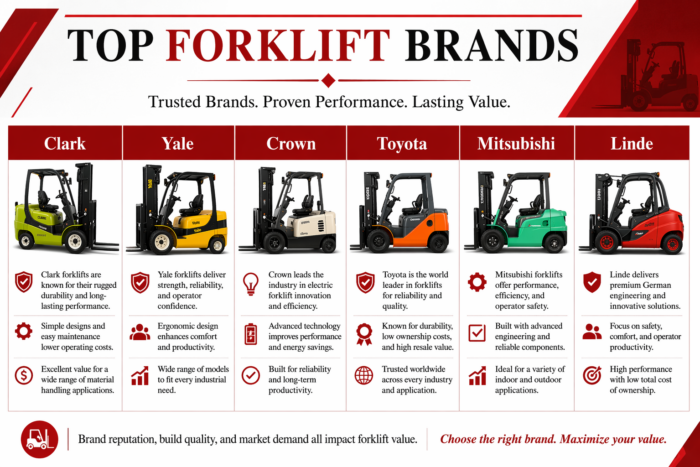
Top Forklift Brands:
- Clark
- Yale
- Crown
- Toyota
- Mitsubishi
- Linde
Each class serves different industries, impacting value differently in a manufacturing equipment appraisal or construction equipment appraisal.
Key Components That Affect Value
A forklift’s value is heavily influenced by its major systems:
Mast Type
- Single stage masts reduce value significantly
- Multi-stage (two-stage, three-stage, quad) increase versatility and value
Batteries & Power Source
- Lead-acid batteries are common but require maintenance
- Lithium-ion systems offer longer lifespan and efficiency
Attachments
High-value attachments include:
- Sideshifters
- Fork positioners
- Paper clamps
- Rotators
These upgrades can significantly impact a fair market value equipment appraisal.
Use Cases: When You Need an Equipment Appraisal
Many clients seek machinery appraisal services for specific financial or legal needs.
Equipment Appraisal for Financing & SBA Loans
Lenders often require:
- Verified collateral value
- Condition-based inspection reports
- Market-supported valuation
This is where a USPAP compliant equipment appraisal becomes critical.
Litigation Equipment Appraisal
Forklifts are frequently involved in:
- Accident claims
- Asset disputes
- Bankruptcy proceedings
Accurate valuation ensures defensible reporting in court.
Insurance & Liquidation Value Appraisals
Insurance companies may require:
- Replacement cost estimates
- Risk-based condition analysis
Liquidation scenarios rely on:
- Orderly liquidation value (OLV)
- Forced liquidation value (FLV)
Industry-Specific Factors That Influence Value
Forklifts operate across multiple sectors, which affects pricing and depreciation.
Manufacturing Equipment Appraisal
- Indoor usage typically preserves value
- Clean environments reduce wear
Heavy Equipment Appraisal (Construction & Outdoor Use)
- Exposure to weather lowers value
- Corrosion and wear increase depreciation
Agricultural Equipment Appraisal
- Seasonal usage patterns impact utilization
- Maintenance history becomes critical
The presentation highlights how harsh environments such as food processing or outdoor salt exposure require deeper inspection and can reduce value significantly .
Inspection Reports: The Backbone of Accurate Valuation
Accurate inspection reports are a critical part of any forklift equipment appraisal, directly influencing the final valuation.
What Gets Inspected
Inspection reports typically include:
- Engine and transmission
- Mast condition and lift cylinders
- Tires and brakes
- Electrical systems
- Hours of use and wear indicators
These findings directly influence valuation outcomes.
Valuation Types Used in Machinery Appraisal Services
Professional appraisals rely on standardized value definitions:
Fair Market Value
- Most common for financing and IRS reporting
Orderly Liquidation Value (OLV)
- Assumes a reasonable sale timeframe
Forced Liquidation Value (FLV)
- Reflects distressed or auction conditions
These valuation types are essential for IRS qualified appraisal and lender compliance.
Local Equipment Appraiser Considerations
Searching for an equipment appraiser near me? Local expertise matters.
Regional factors include:
- Market demand for used forklifts
- Industry concentration (manufacturing vs. logistics)
- Transportation and resale channels
A local accredited machinery appraiser can better assess these variables.
Market Outlook for Forklift Appraisals
The forklift industry continues to show strong demand:
- Growth in logistics and e-commerce
- Increased automation and warehouse expansion
- Rising used equipment markets
This sustained demand supports stable valuation trends in equipment appraisal services.
Choosing the Right Machinery Appraisal Services
A forklift may seem like a standard asset, but its value can vary dramatically based on:
- Configuration and attachments
- Usage environment
- Maintenance history
- Market demand
Whether you need an equipment appraisal for SBA loan, insurance, or litigation, working with a certified equipment appraiser ensures accuracy, compliance, and confidence.
Need a Professional Equipment Appraisal?
Contact Us to connect with a trusted expert in machinery and equipment appraisal and get a certified valuation tailored to your needs.
April 17, 2026 3:00 pm
Comments are closed here.